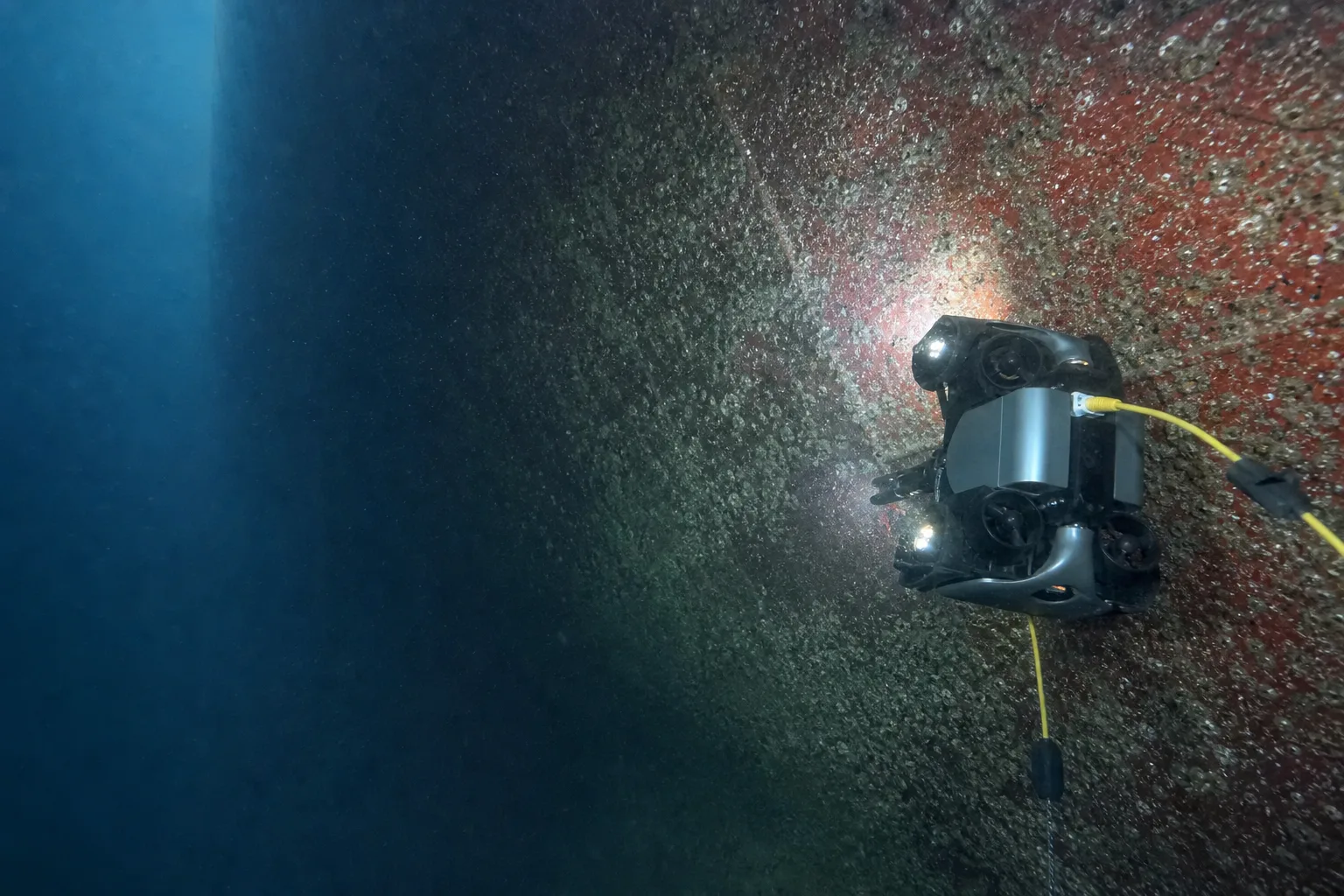
VESSEL HULL ECONOMIC MAINTENANCE
The goal is not more cleaning. It is better-timed cleaning.
Track fouling over time and bring condition, routes, port windows, fuel trends and maintenance constraints into one economic decision.
Join validation ↗01 / THE DISCONNECT
Inspection shows what the hull looks like. It rarely says when to act.
Owners and operators often source inspection or cleaning only when the need becomes visible. Isolated observations are hard to compare with operating context, while cleaning, dry dock and routes lack one economic frame.
02 / DECISION MODEL
Put every timing constraint into the same economic conversation
The model is intended to compare the combined effect of different operating windows and provide an explainable timing recommendation. It supports project judgement and does not guarantee a fixed saving.
- 01Hull fouling condition
- 02Routes and port windows
- 03Fuel trend context
- 04Cleaning and dry-dock cost
- 05Downtime and work constraints
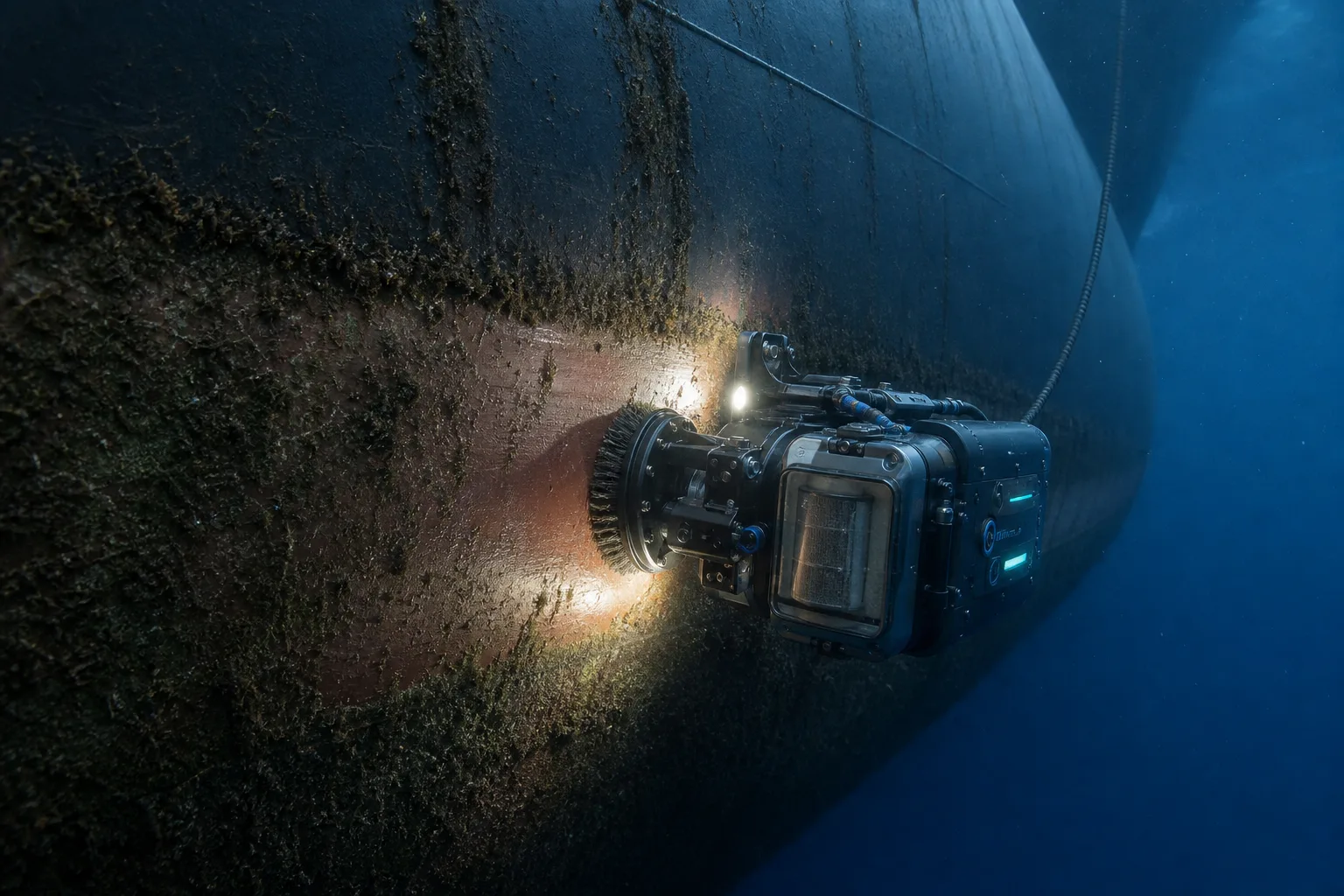
03 / Economic maintenance loop
Build a maintenance loop that can be calibrated for every vessel
- 01
Baseline capture
Record priority areas, fouling condition and comparable imagery.
- 02
Periodic monitoring
Observe visible change along the vessel operating rhythm.
- 03
Fouling context
Organise observations into a continuous condition record.
- 04
Economic assessment
Compare possible windows against operating and maintenance context.
- 05
Work planning
Discuss timing alongside routes, port calls and dry dock.
- 06
Cleaning coordination
Connect suitable robotic cleaning, dry-dock or other service resources.
- 07
Review and calibrate
Reinspect after cleaning and bring the outcome into the next decision.
VERIFY & RETAIN
Every verification starts the next decision
Condition, operating window and outcome remain in one vessel record so the model can be calibrated with real evidence over time.
Joint validation is intended for vessel owners, operators and fleet management teams.